CMY vs RYB: Which Color Wheel Should Watercolor Artists Use?

Have you ever tried learning color theory online only to end up more confused than when you started?
One article says the primary colors are red, yellow, and blue. Another insists they're cyan, magenta, and yellow. Then someone in the comments confidently declares that everything you've ever learned about color theory is wrong. It's no wonder so many artists feel overwhelmed.
The good news? You don't need to choose sides. In fact, the debate between CMY and RYB matters far less than many people would have you believe.
If your goal is to create beautiful paintings, understanding how color works is far more important than winning an argument about which color wheel is "correct." Let's unpack the controversy and look at what actually matters for watercolor artists.
Prefer to watch? Check out the full video below!
Understanding the Two Color Systems
At the heart of the debate are two different color models.
The Traditional RYB System
The RYB system uses red, yellow, and blue as the primary colors. This is the color wheel most of us learned as children. From these primaries, artists create secondary colors:
- Red + Yellow = Orange
- Yellow + Blue = Green
- Blue + Red = Purple
This system has been used by artists for centuries and forms the foundation of much traditional art education.
The CMY System
The CMY system uses cyan, magenta, and yellow as its primary colors. This system became popular through modern printing technology and is the basis of the CMYK printing process used today.
Supporters of CMY often argue that it creates cleaner, brighter color mixtures and more accurately reflects how color behaves scientifically. And technically, they're not wrong. But that doesn't automatically make it the best system for painters.
A Brief History of Color Theory
To understand why these two systems exist, it helps to understand where color theory came from. Long before modern printing presses existed, artists and scientists were trying to understand how color worked.
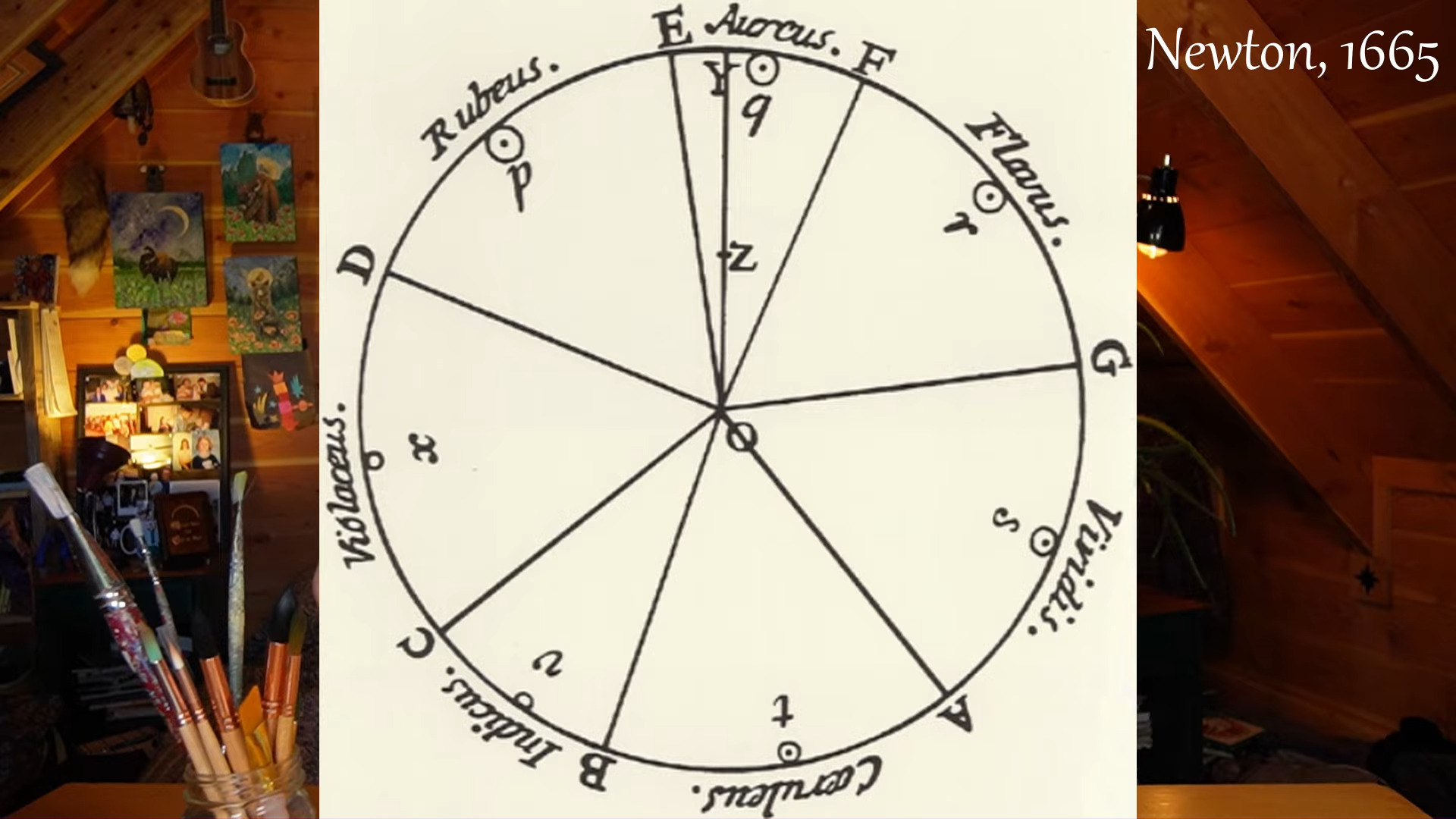
One of the biggest breakthroughs came from Isaac Newton. While studying light in the 1600s, Newton used a prism to split white light into the colors of the rainbow. This experiment helped establish the idea that white light contains many colors rather than being a single color itself.
Newton eventually arranged these colors into a circular format that became the foundation of what we now know as the color wheel. Later, artists adapted these ideas to fit the pigments they actually used in painting. That adaptation eventually evolved into the familiar red-yellow-blue system.
The Part Most Artists Never Learn
Here's where many watercolor artists get stuck. They learn that red, yellow, and blue are primary colors. Then they're told that the system is flawed. Then someone introduces cyan and magenta. Suddenly it feels like everything they've learned is wrong.
But the real issue isn't the color wheel. The real issue is that most artists are never taught color bias.
A single red isn't enough, a single yellow isn't enough, and a single blue isn't enough.
To mix colors effectively, artists need to understand warm and cool versions of each primary. Once you understand color bias, many of the frustrations people blame on the RYB system start to disappear.
This is why many painters struggle with muddy greens, dull purples, and disappointing mixtures. They're not choosing the wrong color wheel. They're missing an important piece of the puzzle.
The Curious Case of Magenta
One of the most fascinating parts of the CMY system is magenta. Magenta occupies a special place in color theory because it doesn't exist as a single wavelength on the visible light spectrum.
Unlike red, orange, yellow, green, blue, and violet, there is no specific wavelength of light that corresponds directly to magenta. Instead, magenta is something our brains create when red and blue wavelengths are perceived together without green. In other words, magenta is a color your brain invents.
That doesn't make it less useful. Far from it. Magenta is one of the most powerful pigments available to artists. But understanding its unusual nature helps explain why it occupies such an interesting position in color theory discussions.

Why the Debate Misses the Point
This is where many artists get distracted. They become so focused on proving which system is correct that they forget why they wanted to learn color theory in the first place.
The goal isn't to win an argument. The goal is to understand color.
Both systems have strengths. Both systems have limitations. Neither system represents the full range of colors humans can see. And neither system automatically makes you a better painter.
What improves your painting is understanding how colors behave, how pigments interact, and how to choose the right colors for the results you want. That's where true color confidence comes from.
Want to Understand Color Mixing More Clearly?
If you've ever felt confused by color theory, you're not alone. Many artists spend years struggling with muddy mixes, disappointing color combinations, and conflicting advice online.
In my Free Color Mixing Workshop, I break down the concepts that matter most for painters, including color bias, vibrant versus dull color mixtures, and how to confidently mix the colors you actually want.
If you're ready to stop guessing and start understanding your paints, I'd love to help.
👉 Join the Free Color Mixing Workshop
Pros and Cons of Each System
Neither system is perfect. Each offers valuable lessons.
Advantages of RYB
- Familiar and intuitive for artists
- Encourages understanding of warm and cool colors
- Supports a wide variety of pigment choices
- Aligns with traditional art education
- Helps artists build a personal palette
Challenges of RYB
- Requires understanding color bias
- Uses more pigments
- Can feel confusing without proper instruction
Advantages of CMY
- Efficient and streamlined
- Produces vibrant color mixtures
- Excellent for limited palettes
- Closely connected to modern printing theory
Challenges of CMY
- Less flexible for developing a unique palette
- Focuses on specific pigments rather than color families
- Can oversimplify how artists actually work with paint

The Real Goal Isn't Choosing a Side
At the end of the day, both systems can help you become a better painter. The question isn't "Which system is correct?" The better question is "What can this system teach me about color?"
The more fluent you become in the language of color, the less important these debates become. You'll understand your pigments. You'll know how to avoid muddy mixtures. You'll be able to follow tutorials even when you don't own the exact same paints. And you'll have the confidence to build a palette that works for you.
That's what color mastery looks like. Not loyalty to a particular system, but the ability to understand and use color intentionally.