3 Things to Do to Your New Watercolor Brushes
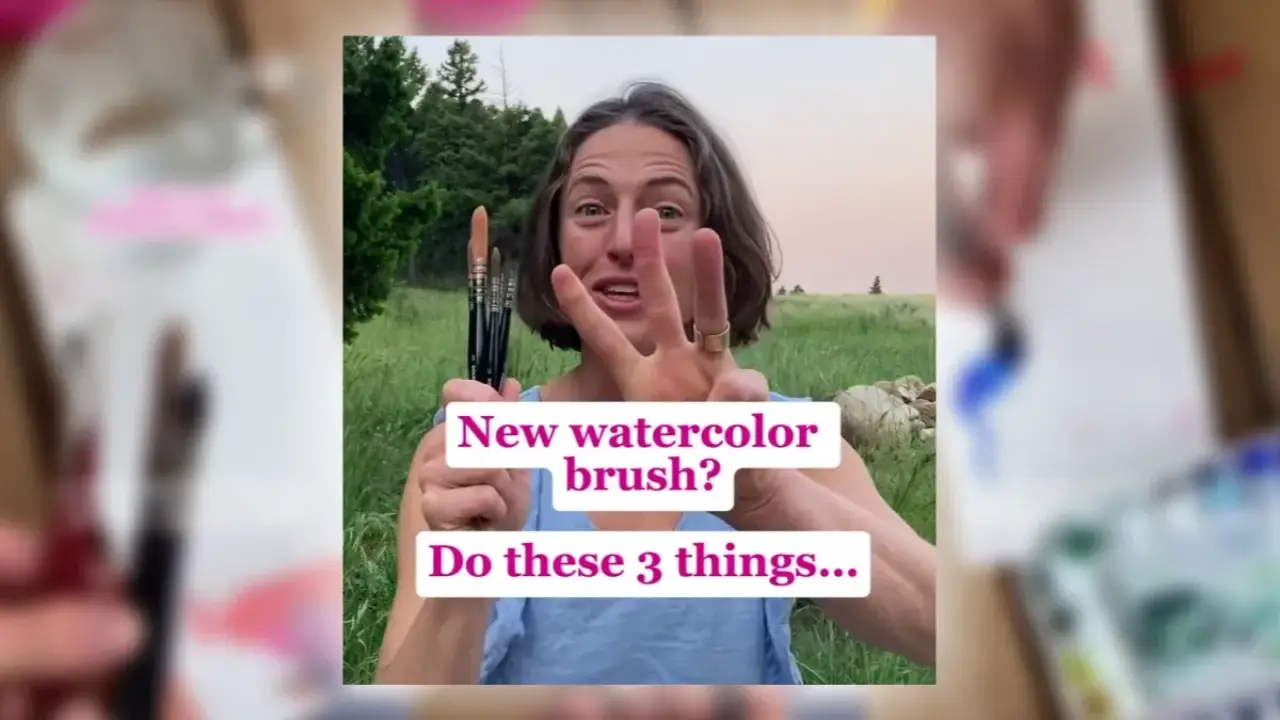
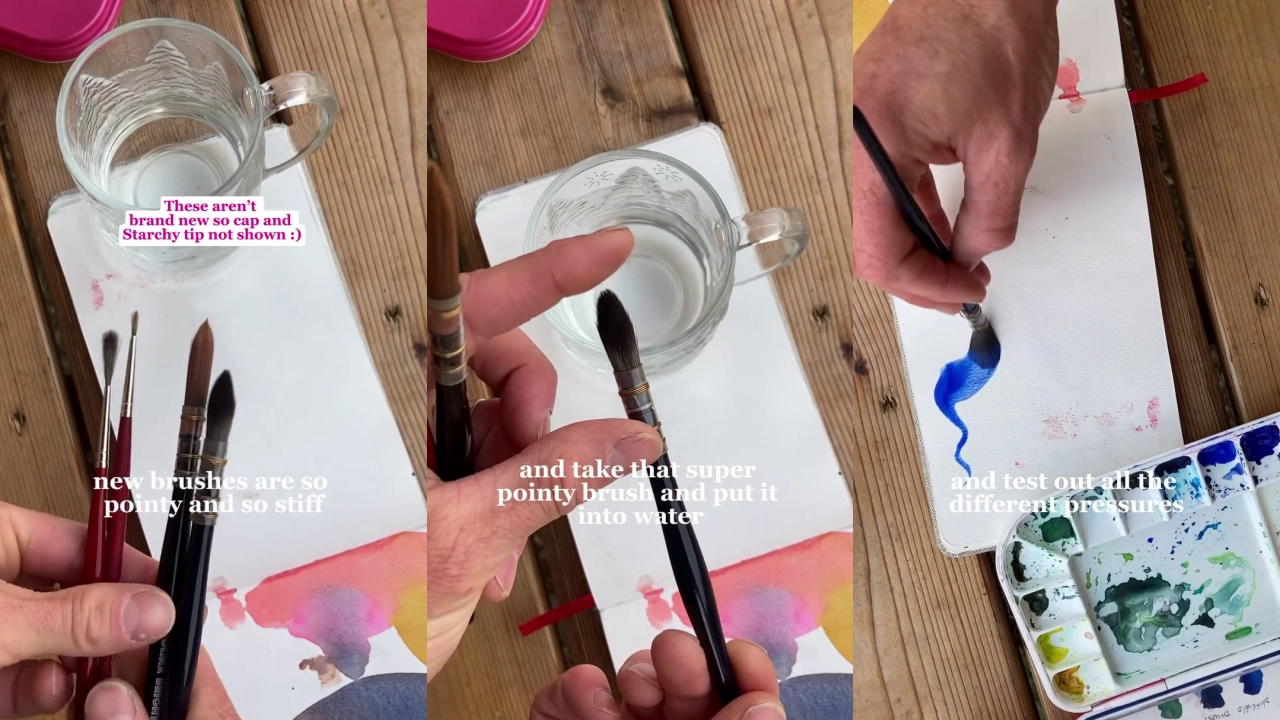
New watercolor brushes come stiff and pointy because they're packed with starch to protect them during shipping. Before you use a new brush, swirl it gently in clean water until the starch dissolves. Then test different pressures and strokes, and notice how much water each brush actually holds.
Why This Matters
A new brush won't behave the way it's going to once it's broken in. That starchy stiffness isn't the brush's true feel, it's packaging protection. Skipping this step means you're judging (and maybe even fighting) a brush based on how it performs before it's ready to actually be used.
Different brushes are also built to hold different amounts of water on purpose, mop brushes hold more than round brushes, for example, so understanding that up front helps you reach for the right brush for the right job.
Try This
Next time you get a new brush, swirl it in clean water first to release the starch. Then dip it in paint and experiment: try light pressure for a thin line, heavy pressure for a thick one, circles, swoops, whatever shows you its range. Finally, pay attention to how much pigment and water it holds compared to your other brushes.
Ready to Build the Right Watercolor Setup?
If you're still figuring out which supplies are actually worth buying, my Free Watercolor Startup Guide walks you through exactly that.
👉 Get the Free Watercolor Startup Guide
If you're curious about my overall approach to teaching watercolor, you can find that on my about page.