Do You Need White Watercolor Paint?

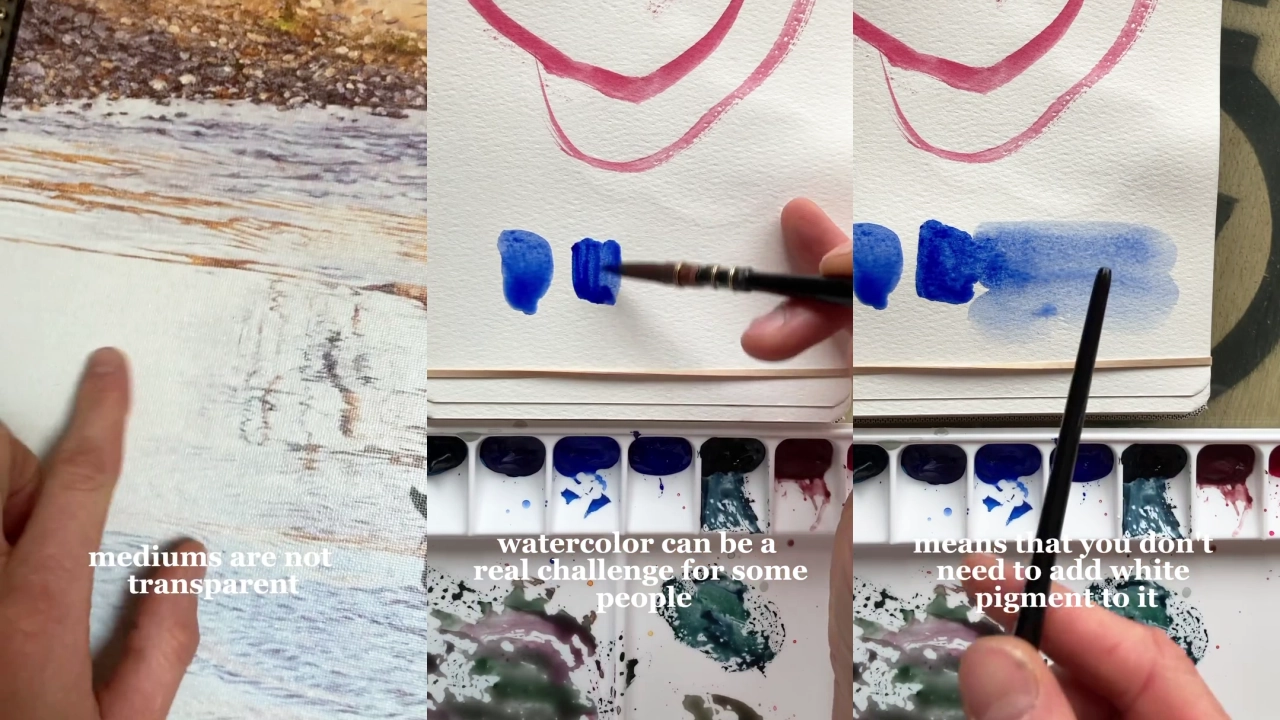
You don't need white watercolor paint to lighten a color, unlike gouache, oil, or acrylic, watercolor is transparent. Instead of adding white pigment, you simply add more water and let the white of the paper show through, which naturally lightens the value of your color.
Why This Matters
This transparency is one of the things that makes watercolor different from every other painting medium. In opaque mediums like gouache or acrylic, white paint is essential for creating lighter values. In watercolor, the paper itself does that job, so thinning your paint with water achieves the same result without needing a separate white pigment at all.
This can feel unfamiliar if you're coming from another medium, but it's actually one of the reasons watercolor feels so light and luminous once you get the hang of it.
Try This
Next time you want a lighter version of a color, resist reaching for white paint. Instead, add more water to your mix and let the paper's own white do the work. Compare the result to what you'd get by adding white gouache, you'll likely notice the watercolor version feels cleaner and more transparent.
Ready to Take Your Color Mixing to the Next Level?
Understanding how to lighten a color without losing its clarity is a big part of confident color mixing. My Free Color Mixing Workshop walks you through exactly that.
👉 Join the Free Color Mixing Workshop
If you're curious about my overall approach to teaching watercolor, you can find that on my about page.