How to Avoid Watercolor Blooms in Soft Edges (Cauliflower Effect)
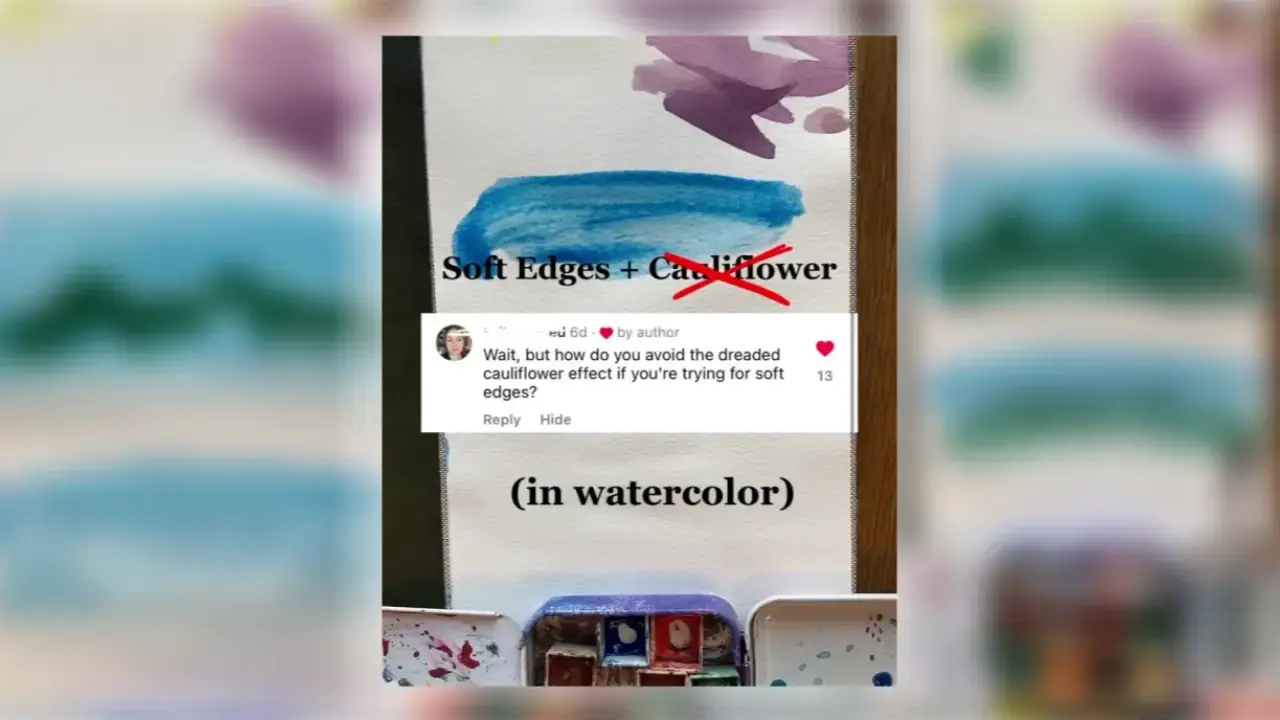
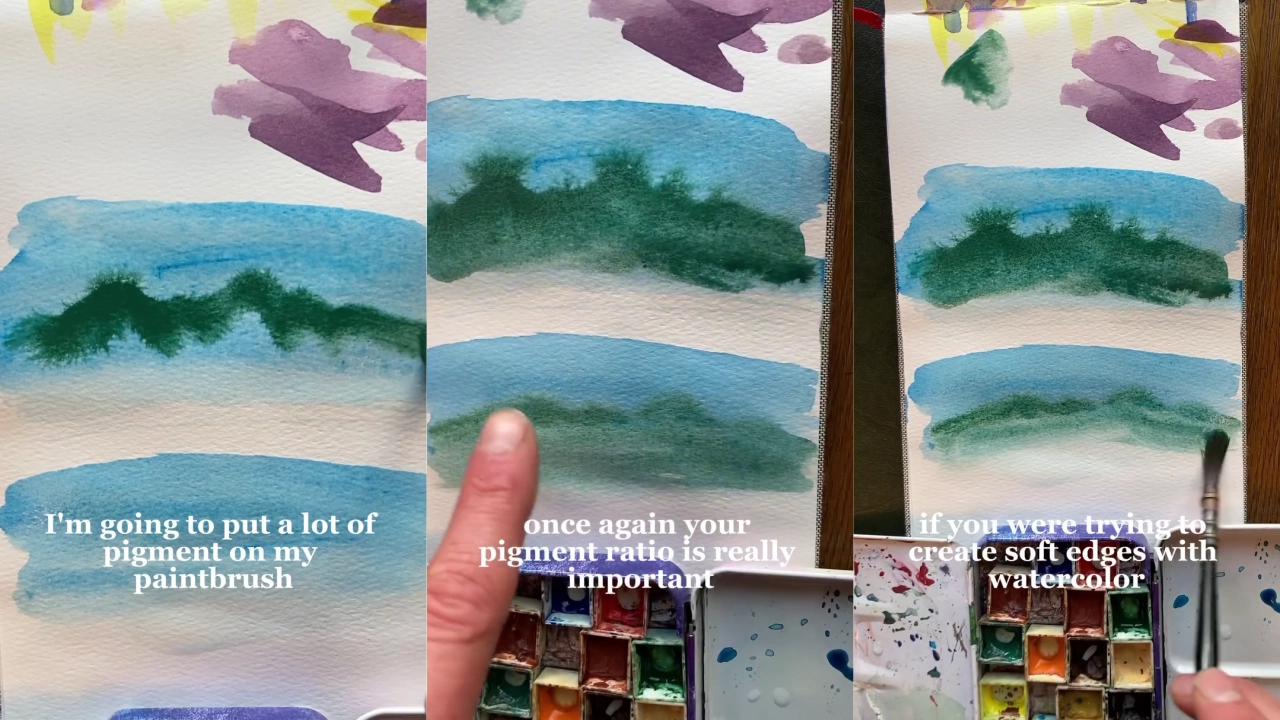
The cauliflower effect happens when your brush carries more pigment than the wet layer underneath it can hold. That extra pigment has nowhere to go, so it pushes outward into the wet paper and blooms. Match the pigment on your brush to the wetness of the layer you're painting into, and it stays put instead of spreading.
Why This Matters
It's easy to assume a bloom is bad luck or bad paper, but it's really just pigment looking for somewhere to go. When your brush has noticeably more pigment than the wet layer beneath it, that imbalance is what pushes the color outward into a bloom.
This matters most anywhere you want a soft, controlled edge, like distant mountains or a hazy background in a landscape. If you want that area to stay light and quiet, an overloaded brush will fight you every time.
Try This
Before touching your brush to a wet layer, test the pigment load on a scrap swatch first. If it wants to bloom on the test swatch, it'll bloom on your painting too, so dial back the pigment until it stays calm.
Want to Go Deeper?
Pigment ratio isn't just about avoiding blooms, it also affects how diluted or watery your mixes feel from one stroke to the next. If you've ever wondered why your washes seem inconsistent even when you're using the same paint, this related Quick Tip breaks down the same underlying balance from a different angle.
Watercolor Pigment to Water Ratio: Think Tea, Milk, Cream, Butter
Ready to Take Your Color Mixing to the Next Level?
Understanding how pigment behaves in wet layers is a core color mixing skill. My Free Color Mixing Workshop is a good place to keep building that confidence.
👉 Join the Free Color Mixing Workshop
If you're curious about my overall approach to teaching watercolor, you can find that on my about page.