How to Mix Brown Watercolor: Why It's Not a Boring Color

Brown might look boring straight from the tube, but mixed with other colors, it becomes one of the most useful tools in your palette. Burnt umber, in particular, transforms into the soft, muted, natural tones that show up constantly in real landscapes.
Why This Matters
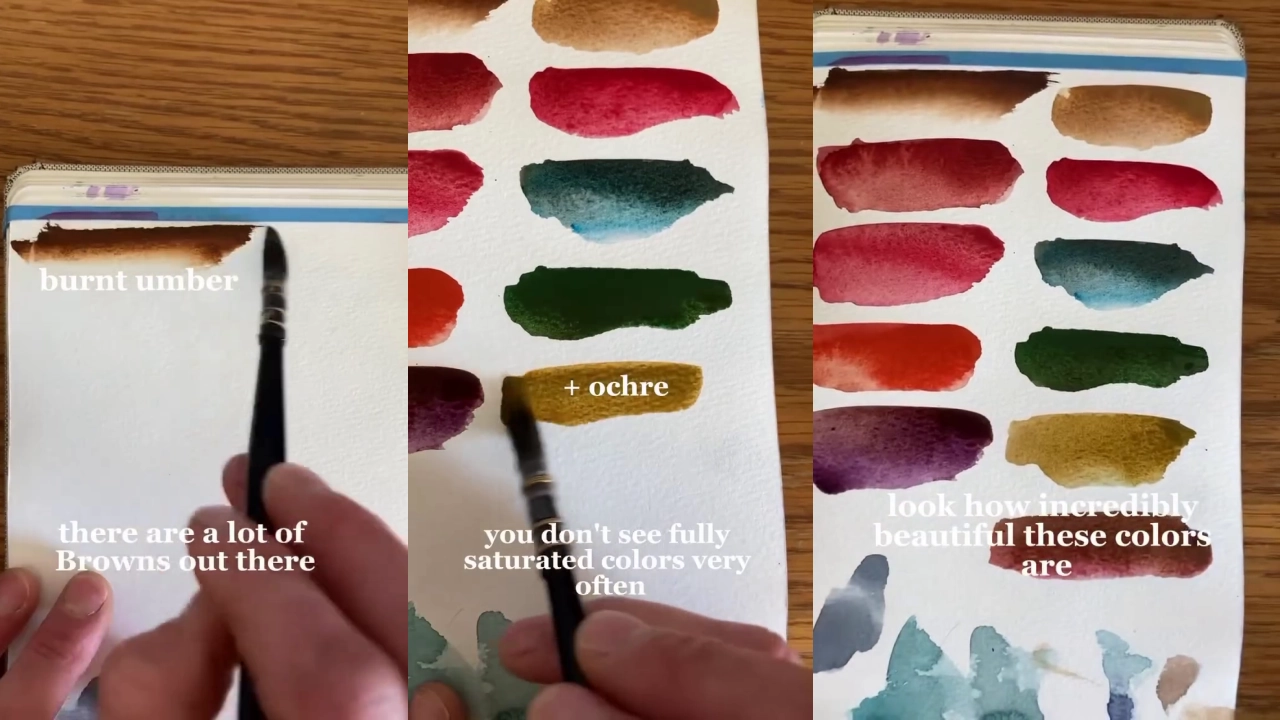
Fully saturated colors are rare in nature. Outside of a vivid sunset or a bright flower, most of what you actually see outdoors is dulled, muted, and complex, not pure and saturated. Mixing your saturated colors with brown is how you get closer to what your eye actually sees.
This is the same idea behind avoiding muddy mixtures; it's not about avoiding brown, it's about using it on purpose.
Try This
Take burnt umber and mix it with a few different saturated colors from your palette one at a time. Notice how each combination creates a different muted, natural tone. These are the colors your landscape paintings actually need, not the fully saturated ones straight from the tube.
Want to Go Deeper?
This Quick Tip covers one useful mixing habit. If you'd like to understand more about why colors turn muddy or vibrant depending on how you mix them, read the complete guide:
👉 Why Are My Watercolors Muddy? The Real Reason Your Colors Look Dull (And How to Fix It)
Ready to Practice?
If you'd like hands-on help mixing confident, natural tones like these, my Free Color Mixing Workshop walks you through exactly that.
👉 Join the Free Color Mixing Workshop
If you're curious about my overall approach to teaching color and watercolor, you can find that on my about page.