How to Use Masking Fluid in Watercolor: A Beginner's Guide
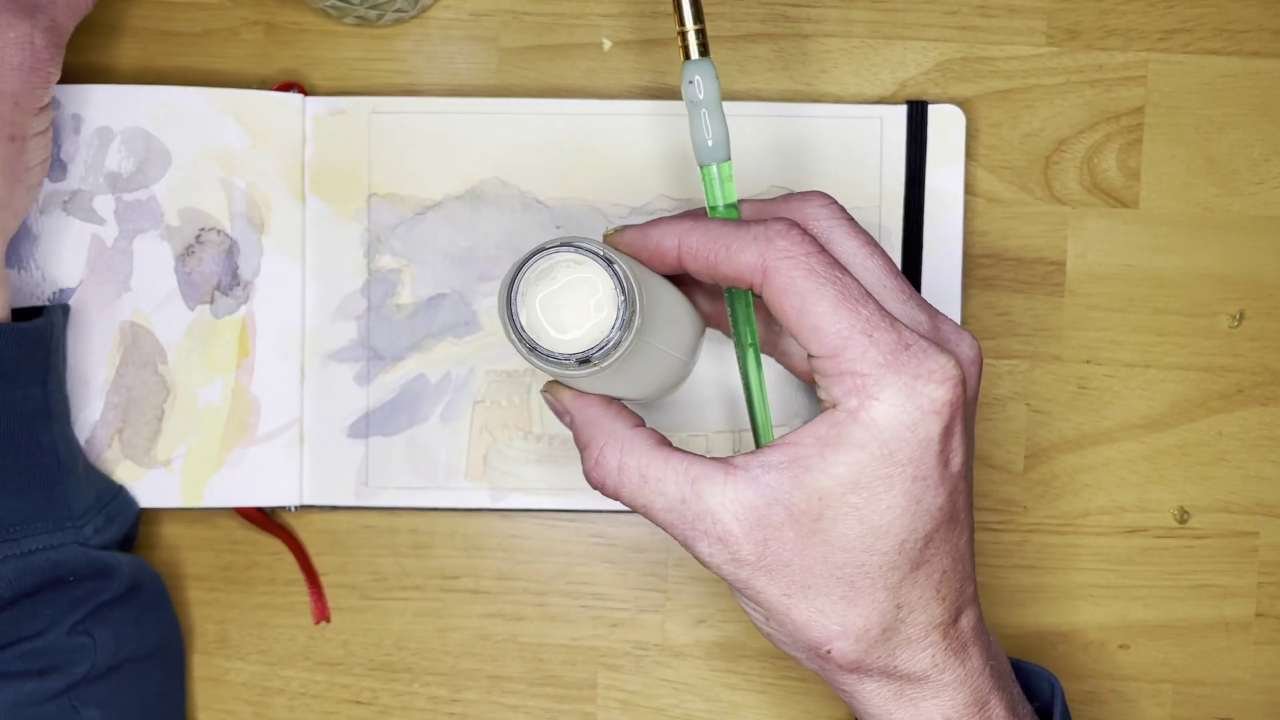
Have you ever wondered how and when to use masking fluid in your watercolor painting? Masking fluid is a medium you apply directly to the paper. Once it dries, it completely protects whatever is underneath, letting you paint right over it without worrying about ruining the details beneath.
It's not something every watercolor artist reaches for regularly, but there are specific situations where it becomes the perfect tool for the job. This guide walks through exactly how to use it, the mistakes that trip up beginners, and how to decide whether masking fluid or a simpler technique is the better choice for your painting.
Prefer to watch? Check out the full video below!
What Is Masking Fluid and How Does It Work?
Masking fluid is a rubbery liquid medium that you paint onto your paper before you begin your watercolor work. Once it dries, it forms a protective barrier. You can paint directly over it as if it isn't even there, and whatever is underneath stays completely preserved. When you're finished, you simply peel it away to reveal the untouched paper or color beneath.
How to Protect Your Brushes While Using Masking Fluid
Because masking fluid is rubbery, it can quickly ruin a good brush if you're not careful. Always use a brush you don't mind sacrificing, not your favorite one.
The best way to protect your brush is to work with soapy water. Dip your brush in soapy water before loading it with masking fluid, or keep a bar of soap next to your palette and swipe your wet brush across it before dipping into the fluid. Either method acts as a barrier that keeps the masking fluid from gumming up your bristles.
Even with a sacrificial brush, you'll still want one with a decent point. Applying masking fluid too thick in areas meant to stay thin and detailed will throw off the whole effect.
Applying and Drying Masking Fluid the Right Way
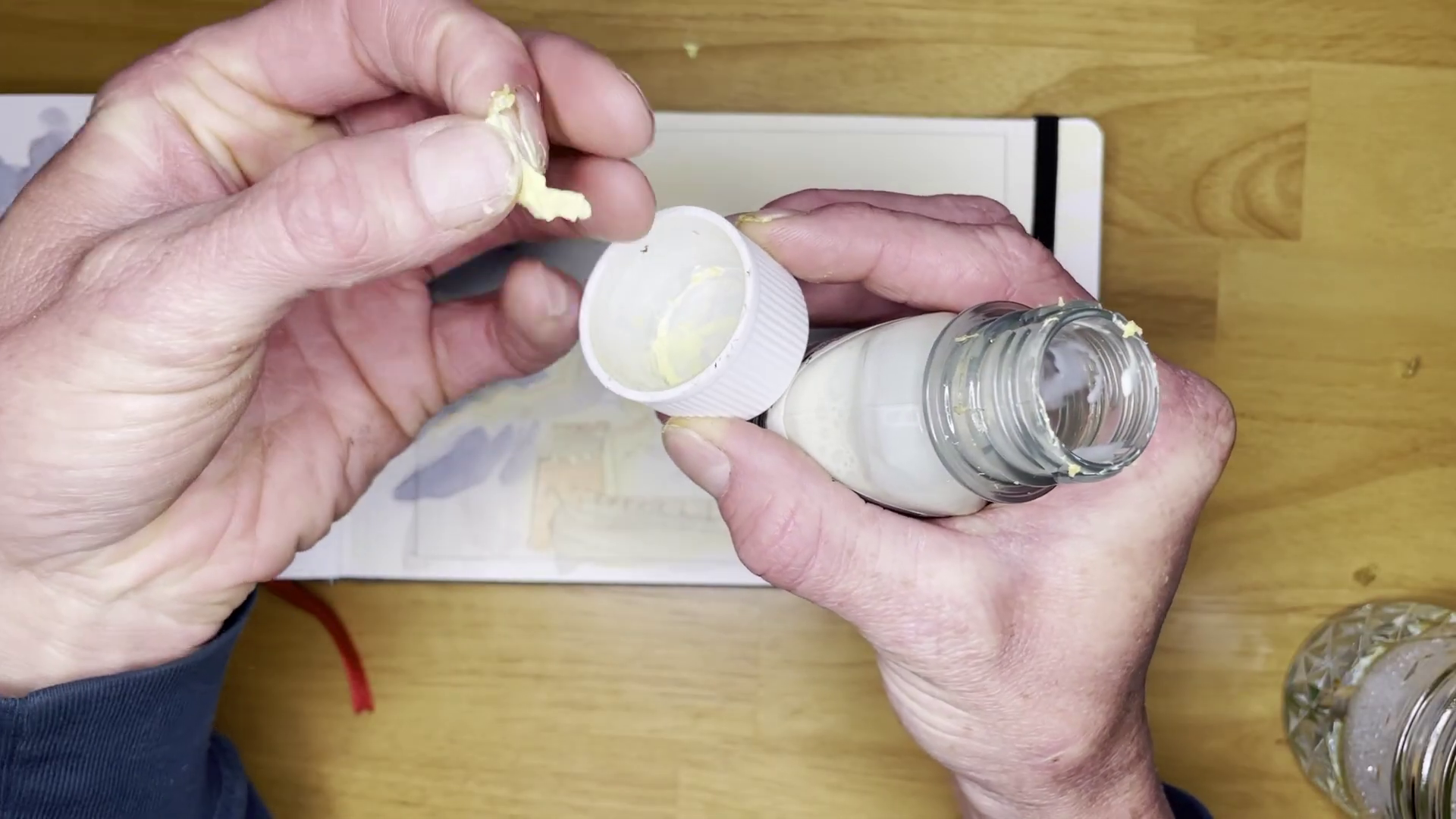
Letting masking fluid fully dry before you paint over it is absolutely critical. If you paint over it while it's still wet, the color will actually seep into the fluid and spread into exactly the areas you were trying to protect.
A hair dryer or heat gun can speed up the process, but you'll usually be able to tell when it's ready. Dry masking fluid looks gummy and slightly dull, and it's fairly obvious once it's gotten there.
When Should You Actually Use Masking Fluid?
There are a few different ways to preserve white or light areas in a watercolor painting, and masking fluid is only one of them. The two most common approaches are simply painting carefully around the area you want to stay light, or using white gouache to bring highlights back at the end.
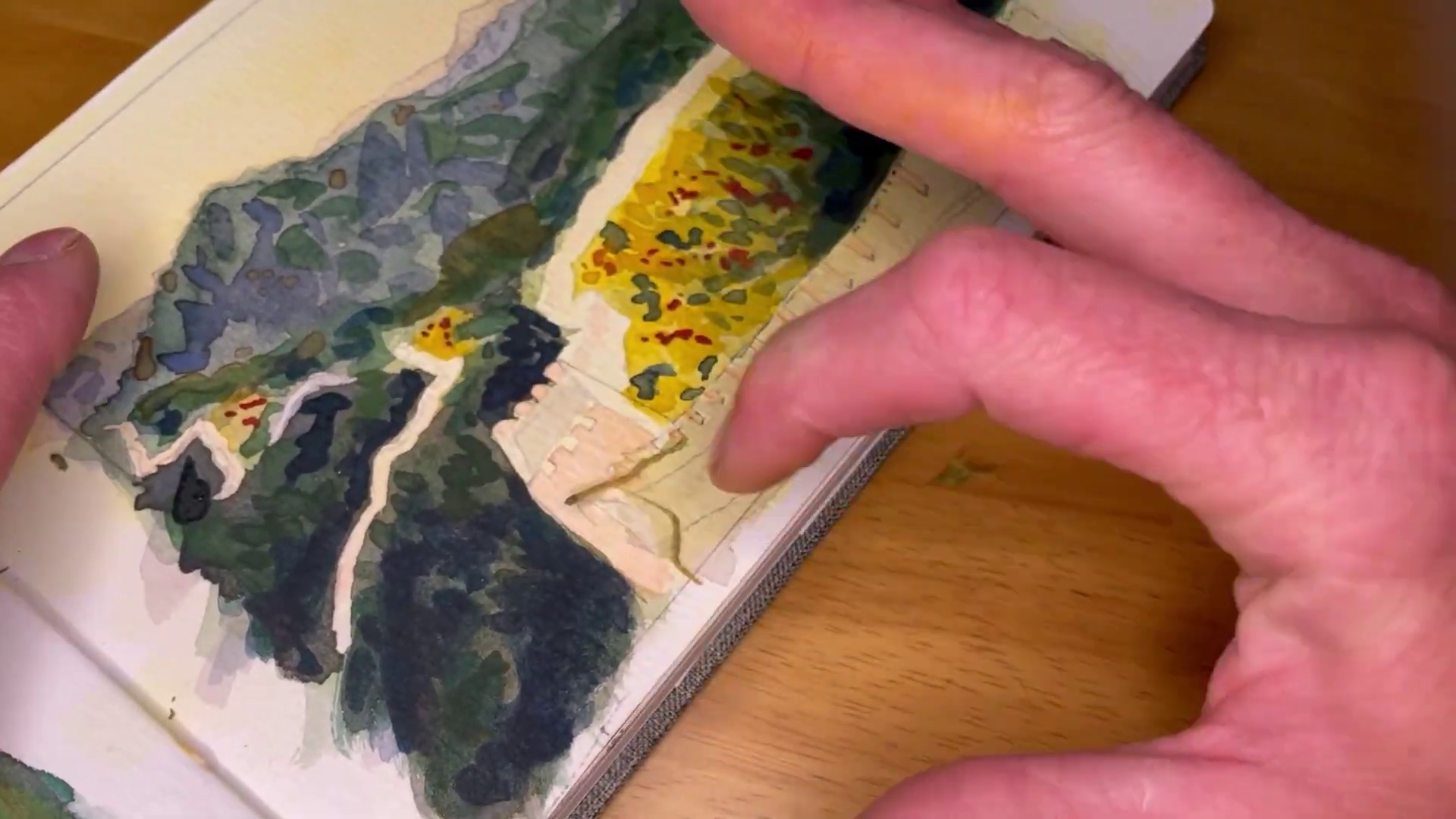
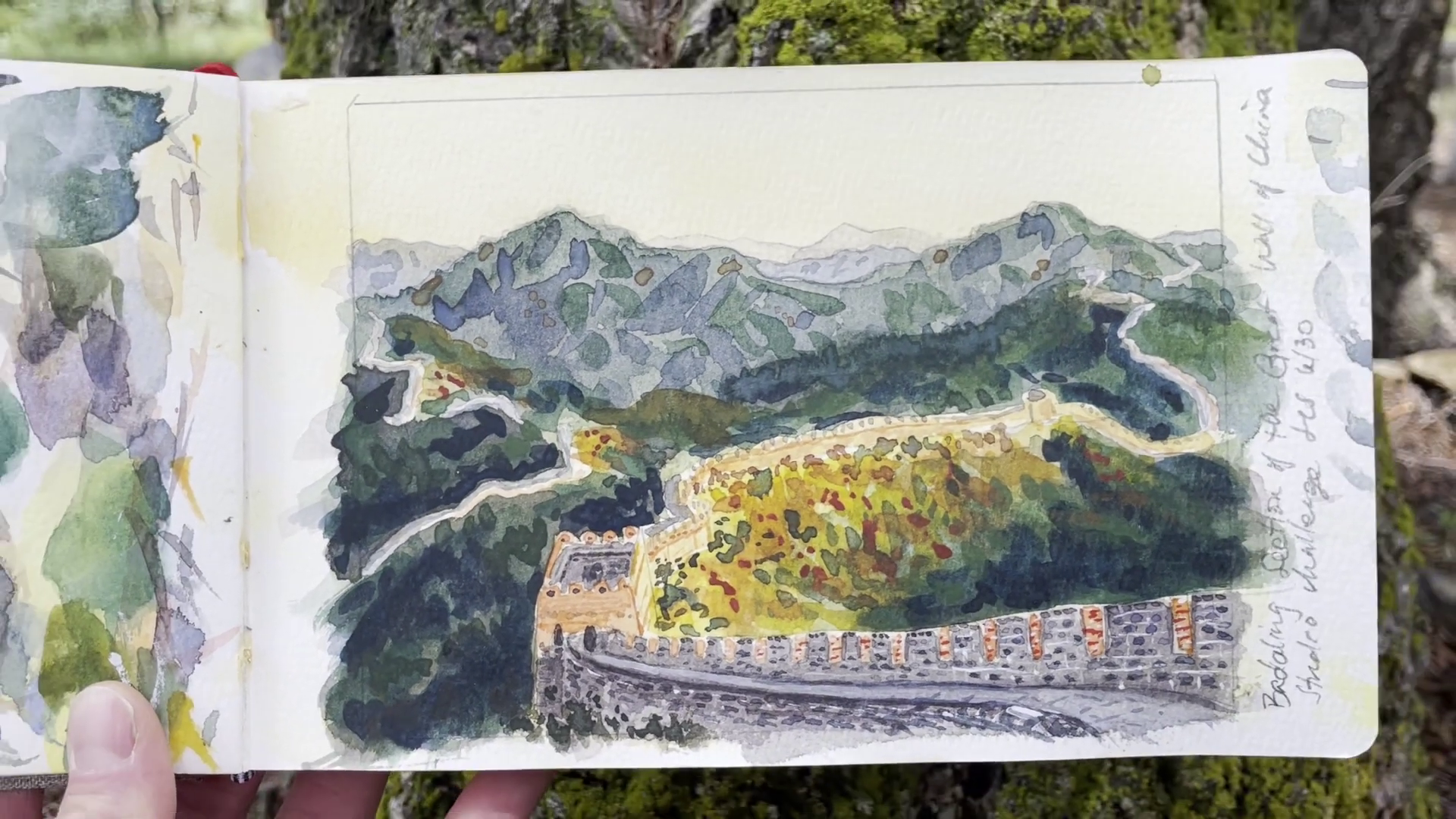
So when does masking fluid actually earn its place over those simpler options? It's most useful when the area you need to preserve is tangled up with other complex detail, making it genuinely difficult to paint around. In a painting like this one, where a section of the Great Wall of China was intricately woven into a mountainside, trying to paint around the wall while still tracking the mountain's light and dark values became more distracting than helpful. Masking fluid let the wall stay fully protected while the mountain got full attention.
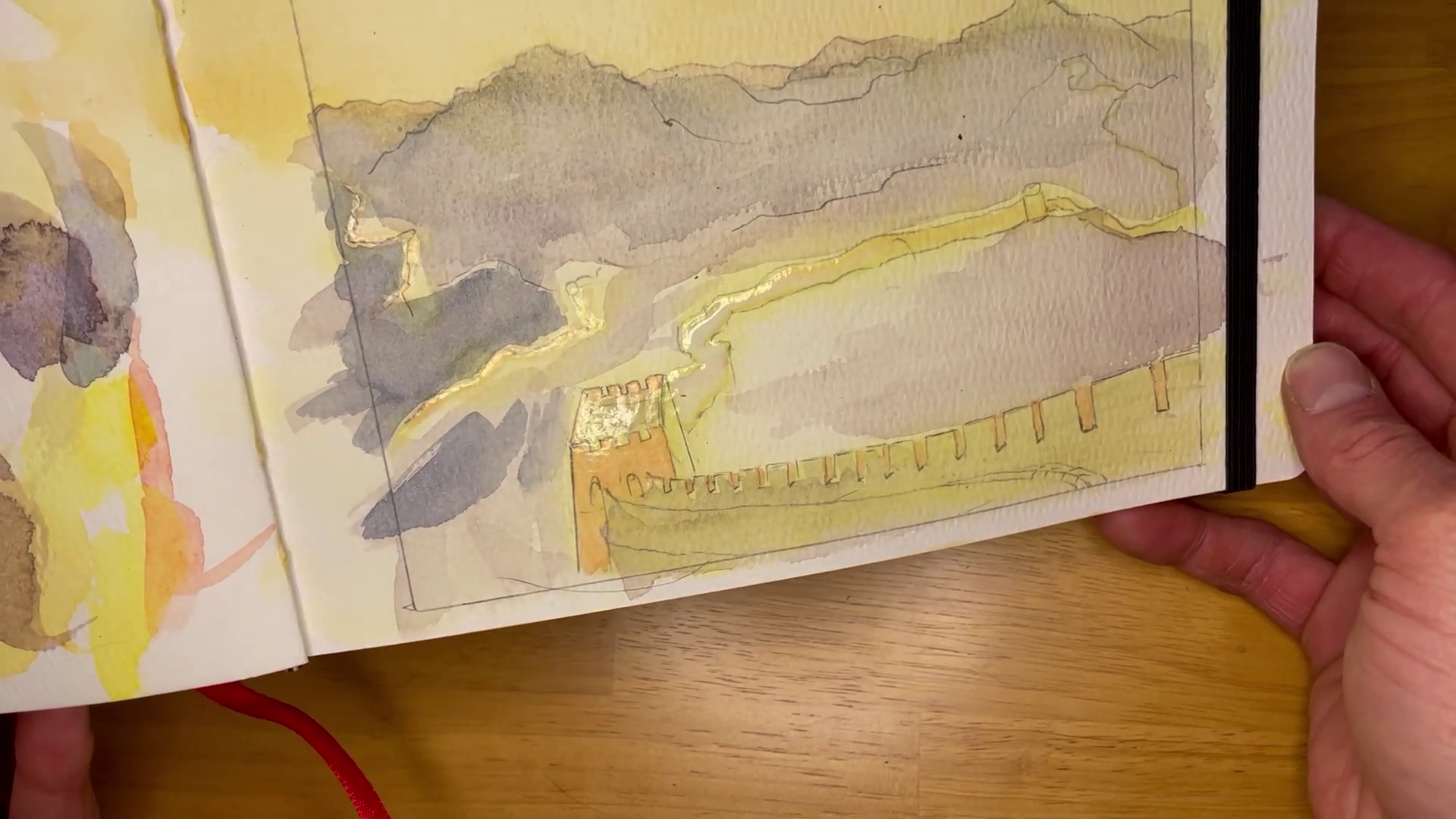
Masking fluid is also the better choice whenever the preserved area needs its own detail and color, not just plain white. White gouache works well for simple highlights, like a reflection in water. But a detailed brick wall with its own warm, glowing color needed full watercolor treatment once it was uncovered, not a flat wash of gouache.
One thing worth knowing: masking fluid doesn't only preserve white paper. You can paint a layer of color first, let it dry completely, then apply masking fluid over it. That layer stays protected while you paint everything around it, which gives you even more flexibility in how you plan a painting.
How to Remove Masking Fluid Without Ruining Your Painting
Once everything is completely dry, masking fluid peels away easily with clean fingers. Make sure your hands are genuinely clean before you touch it. Any oil or grease on your fingers will transfer straight onto your paper, and that's a disappointing way to finish an otherwise careful painting.
Why Masking Fluid Isn't Always the Answer
Despite how useful masking fluid can be, it isn't something every artist needs to reach for often. It's another medium to carry around, another step in the process, and another thing that can go wrong if it isn't applied or removed carefully.
For a lot of paintings, simply being careful and finishing with white gouache is a lighter, simpler process that gets the job done just as well. Masking fluid earns its place specifically when the detail or complexity of what you're preserving makes the simpler methods genuinely harder to pull off.
A Simple Way to Avoid Feeling Overwhelmed by Detail
One more thing worth mentioning: you don't have to paint every inch of a detailed subject with the same level of focus. Choosing one section to bring fully to life, and letting the viewer's eye fill in the rest, is often more effective than rendering every detail evenly. It also makes finishing a painting feel far less overwhelming.
Questions You Might Have
Will masking fluid ruin my paintbrush?
Not if you're careful. Use a brush you don't mind sacrificing, and dip it in soapy water (or swipe it across a bar of soap) before loading it with masking fluid. The soap keeps the rubbery fluid from gumming up your bristles, so your good brushes stay untouched.
How do I know when masking fluid is dry enough to paint over?
Dried masking fluid looks slightly dull and feels gummy to the touch, not wet or shiny. If you paint over it too soon, the color will seep underneath and spread exactly where you didn't want it. A hair dryer or heat gun can speed things up if you're impatient.
Can I use masking fluid over color, not just white paper?
Yes. Paint a layer of color first, let it dry completely, then apply masking fluid over it just like you would on bare paper. That layer stays protected while you paint everything around it, giving you more flexibility in how you plan your painting.
Ready to Build Your Watercolor Foundation?
Masking fluid is just one tool in a much bigger watercolor toolkit. If you're still building your fundamentals, my Free Beginner Watercolor Class walks you through the basics so you can paint with confidence, one lesson at a time.
👉 Join the Free Beginner Watercolor Class
Want to Paint Alongside a Community Every Week?
If you'd like ongoing support and to paint together with an international community every week, The Studio is where that happens. It's my paid membership community for artists who want consistent guidance and connection.