Ocean Sketching in Watercolor: How to Get a Straight Horizon Line
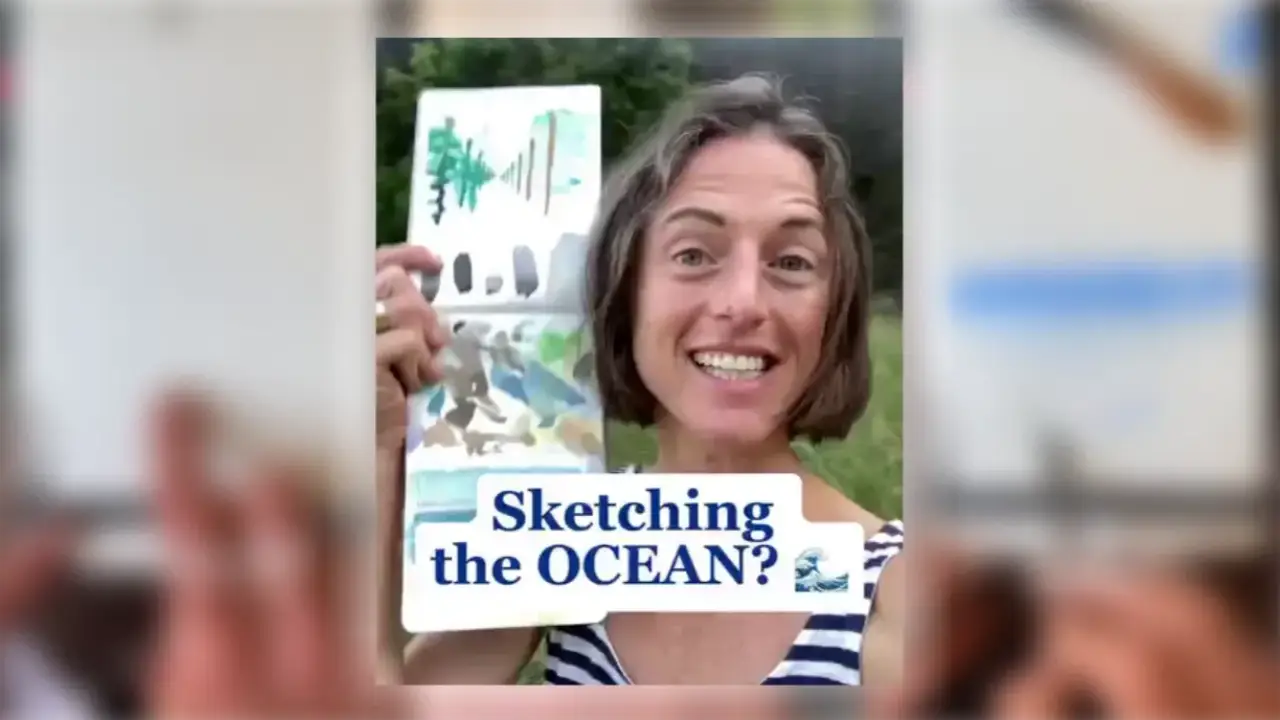
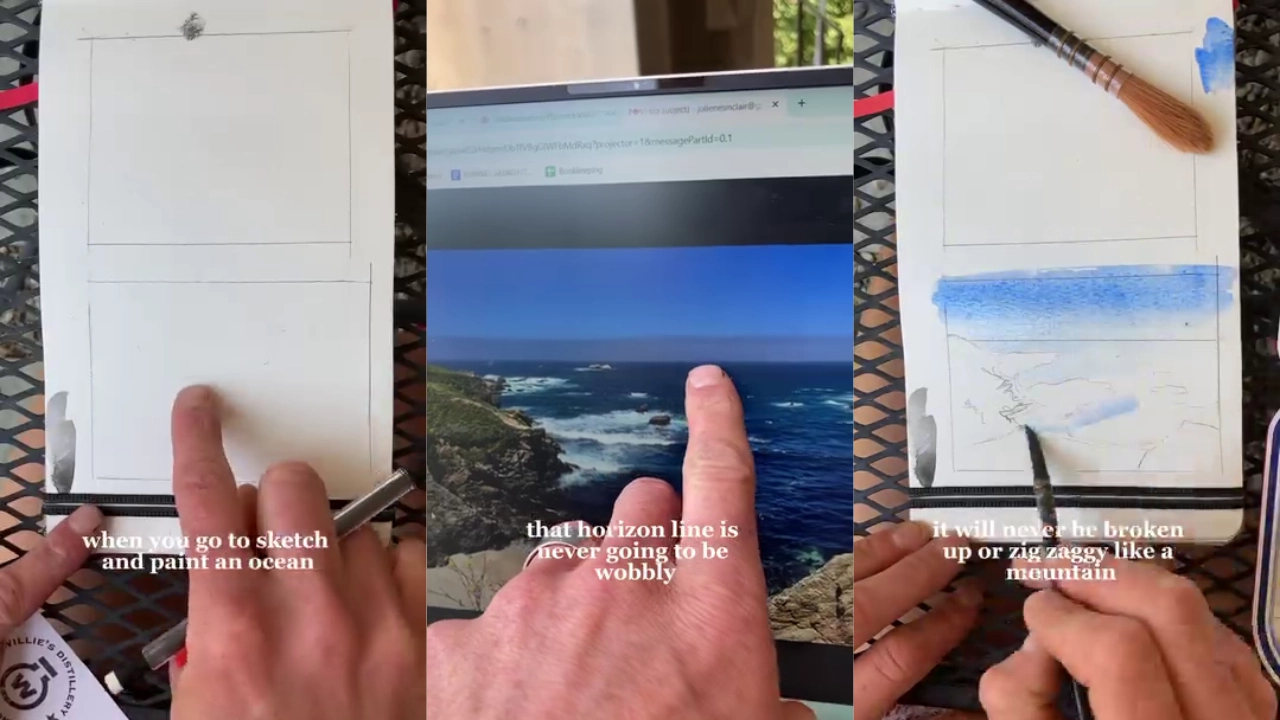
When sketching an ocean, your horizon line needs to stay perfectly flat, never wobbly, zigzagged, or curved. Draw it with a straight edge so it's perpendicular to the sides of your painting and parallel to the top and bottom.
Why This Matters
A flat horizon line is what makes an ocean read correctly, unlike a mountain range. Where a mountain's silhouette can wobble and break up naturally, an ocean's horizon can't, since real horizon lines are always straight. Even a slight curve or wobble in this one line is enough to make the whole painting feel off, even if the viewer can't immediately say why.
If you want to stylize it further, you can play with something like a fisheye effect, but the underlying rule stays the same: the ocean itself must read as flat.
Try This
Before you paint your ocean, draw the horizon line first using a straight edge, like a ruler, a piece of tape, or a card. Check that it's parallel to the top and bottom of your paper before you commit to it in paint.
Want to Go Deeper?
If you liked this, this related Quick Tip covers another use for the same simple tool, capturing accurate angles when you sketch: How to Sketch Before Watercolor Painting
Ready to Build Your Watercolor Foundation?
If you're still building your composition and sketching fundamentals, my Free Beginner Watercolor Class covers concepts like these.
👉 Join the Free Beginner Watercolor Class
If you're curious about my overall approach to teaching watercolor, you can find that on my about page.