Watercolor Glaze vs Wash: What's the Difference?

A wash is the first layer of paint you put down to establish a painting's overall tone and color. A glaze is a transparent layer added on top of a dry wash to build depth, detail, and richer color, without muddying what's underneath.
Why This Matters
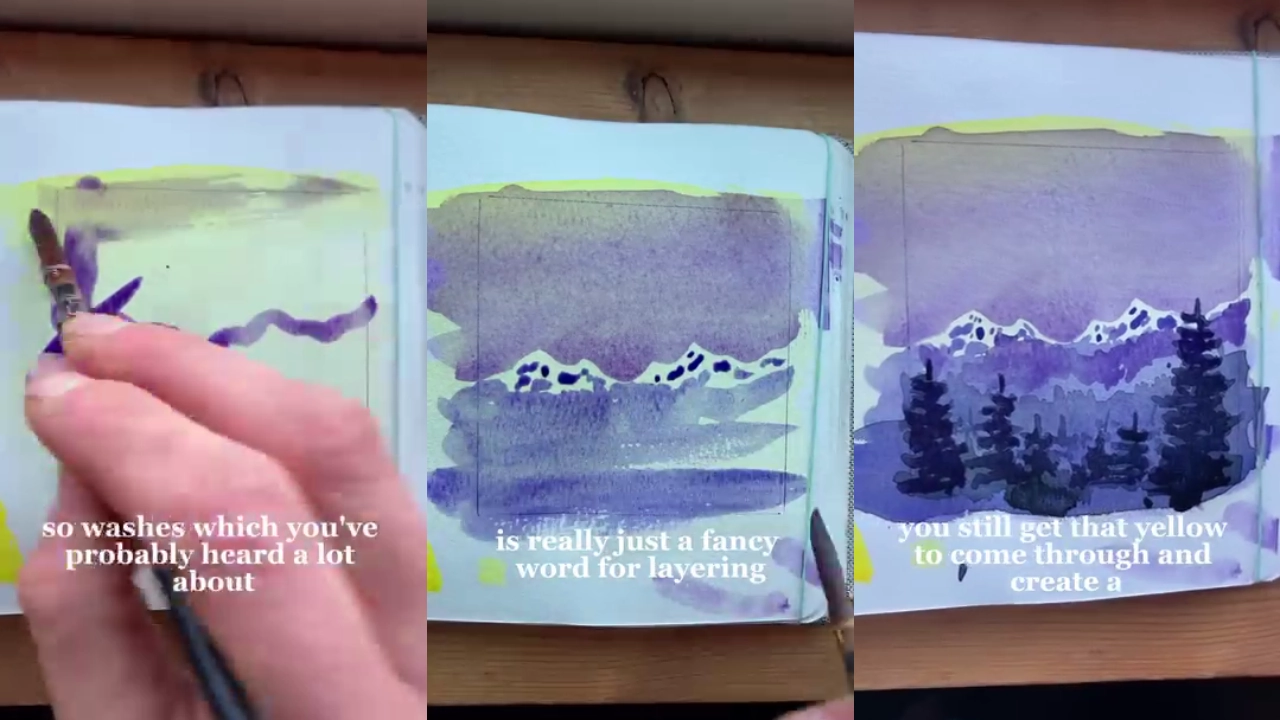
Layering, not mixing, is what keeps colors luminous. If you mix two colors together on your palette before applying them, like yellow and purple, you get a muted, muddy result. But if you lay one down as a wash, let it dry, then glaze the second color over it, the first color still shows through, creating a luminous effect neither color could achieve mixed together.
This is the same underlying color-bias principle behind avoiding muddy watercolors generally: how you combine two colors changes the result just as much as which two colors you choose.
Try This
Paint a wash of one color first and let it fully dry. Then glaze a second, contrasting color on top in a small area. Compare that layered result to what you'd get by mixing the same two colors together first. Notice how much more luminous the layered version feels.
Want to Go Deeper?
If you liked this, this related long blog explains the color theory behind why layering keeps colors vibrant while mixing the same colors can turn them dull:
Why Are My Watercolors Muddy? The Real Reason Your Colors Look Dull (And How to Fix It)
Ready to Take Your Color Mixing to the Next Level?
Understanding how colors interact, whether mixed or layered, is a core color mixing skill. My Free Color Mixing Workshop is a good place to keep building that confidence.
👉 Join the Free Color Mixing Workshop
If you're curious about my overall approach to teaching watercolor, you can find that on my about page.