Watercolor Wash Techniques: Flat, Gradient, and Variegated
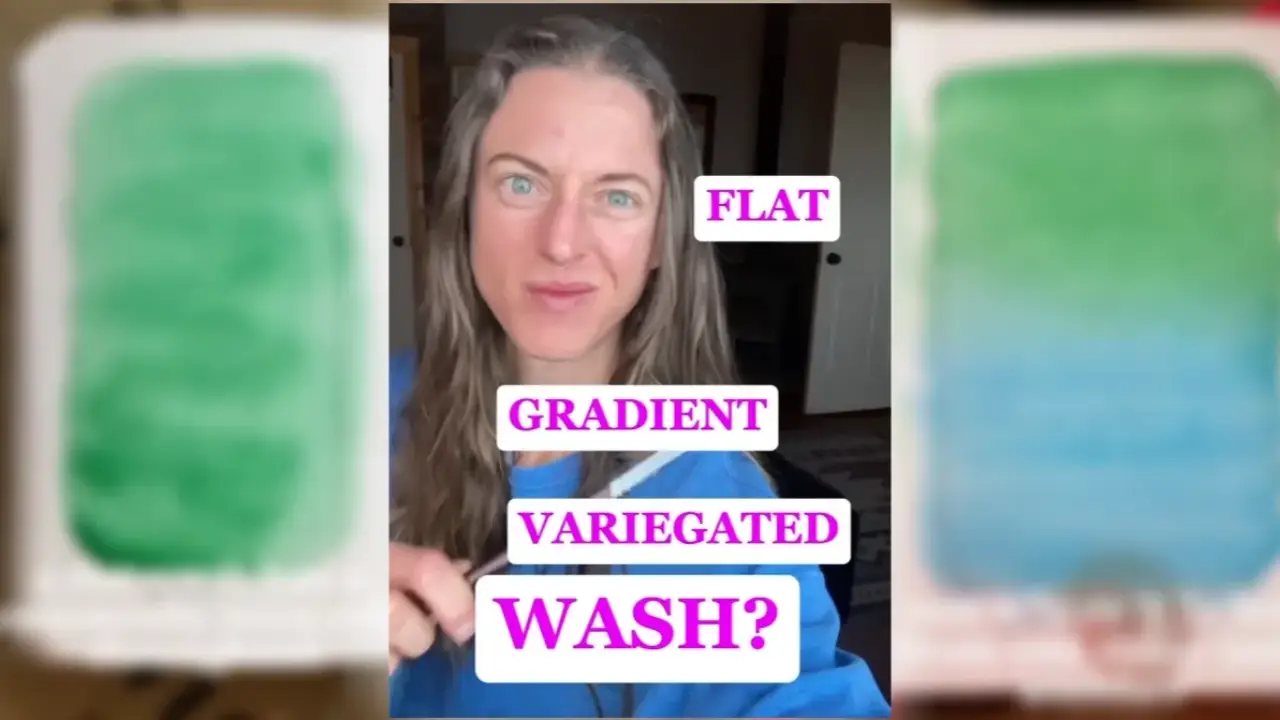
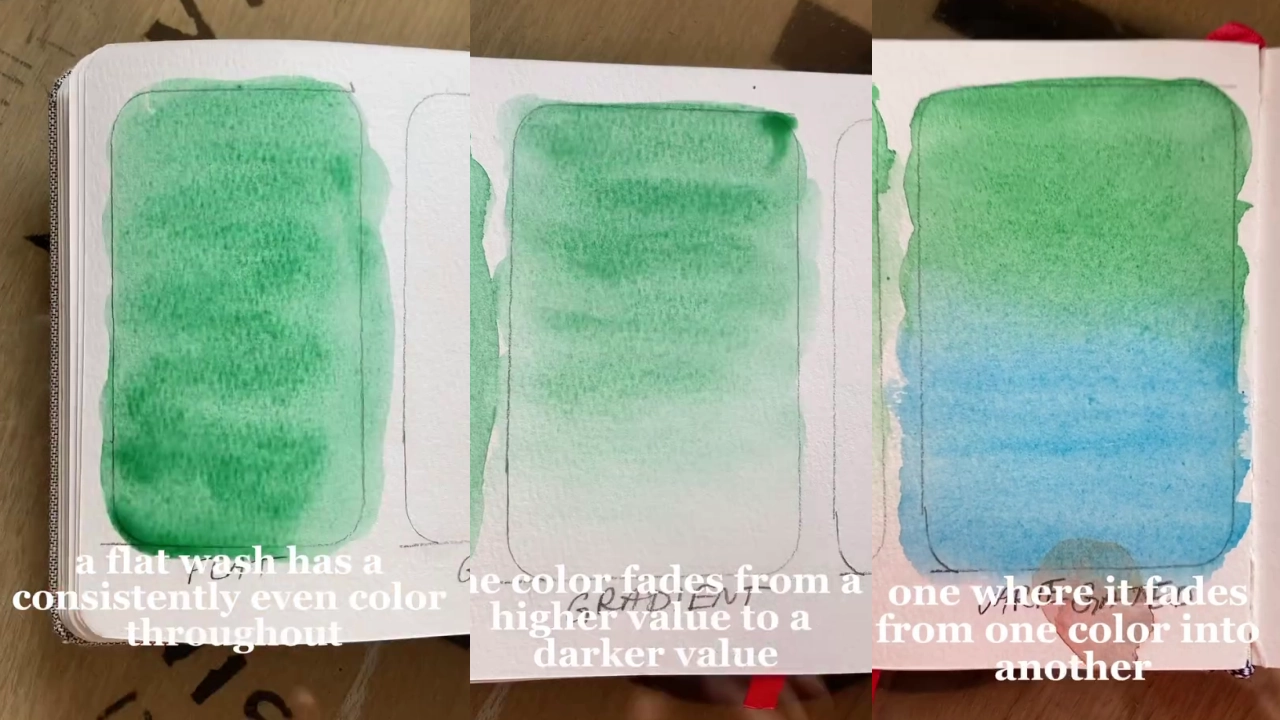
A flat wash has consistent, even color throughout. A gradient wash fades from a lighter value to a darker one. A variegated wash fades from one color into a completely different color. All three are foundational techniques every watercolor painting relies on.
Why This Matters
Most paintings use all three washes without you even realizing it. A flat wash is perfect for a solid, even background. A gradient wash creates the illusion of depth, like a sky fading from light to dark near the horizon. A variegated wash is how skies, water, and skin tones get their natural, shifting color.
Once you can identify which wash a painting is using, you can recreate any effect you see in a tutorial or reference photo.
Try This
Paint three small squares. In the first, keep the color perfectly even from top to bottom, that's your flat wash. In the second, start dark and gradually add more water as you move down, that's your gradient wash. In the third, start with one color and introduce a second color partway down before the first dries, that's your variegated wash.
Ready to Practice These Live?
Reading about wash techniques is one thing, painting them alongside someone is another. My Free Studio Paint-Along is a beginner-friendly live session where we sit down and actually paint together, washes and all.
👉 Join the Free Studio Paint-Along
If you're curious about my overall approach to teaching watercolor, you can find that on my about page.