What Is One-Point Perspective in Watercolor?
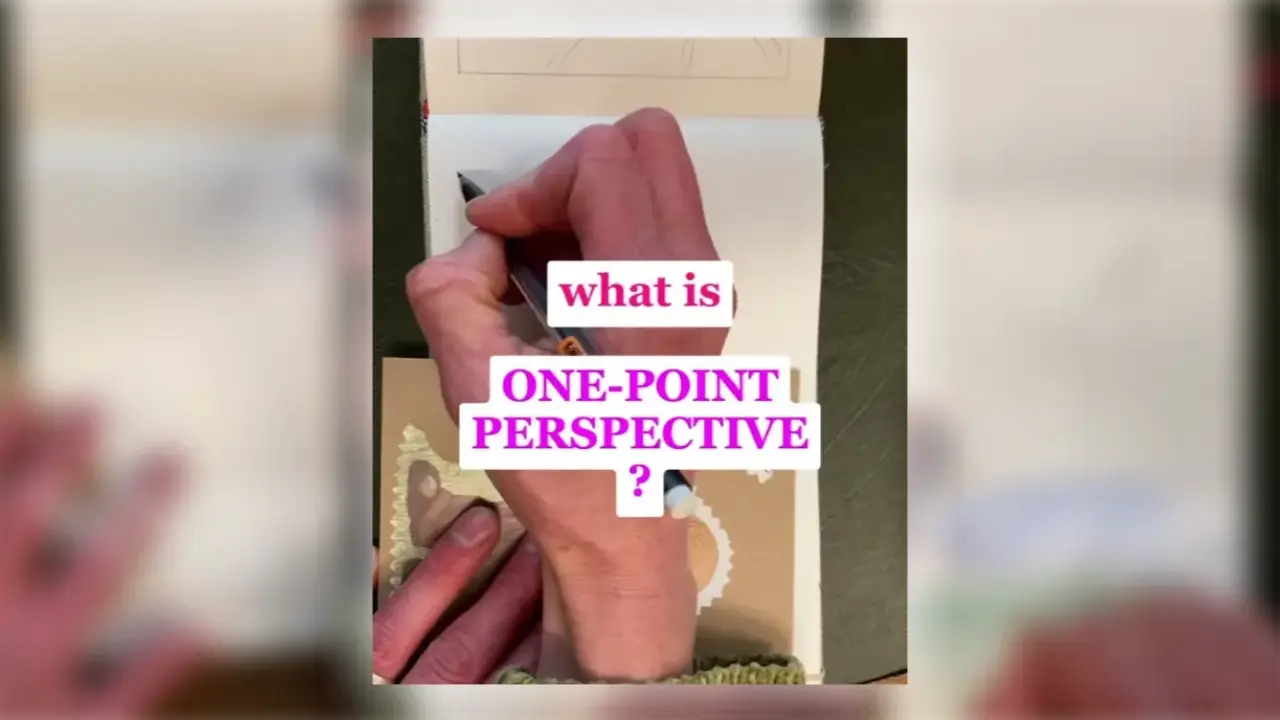
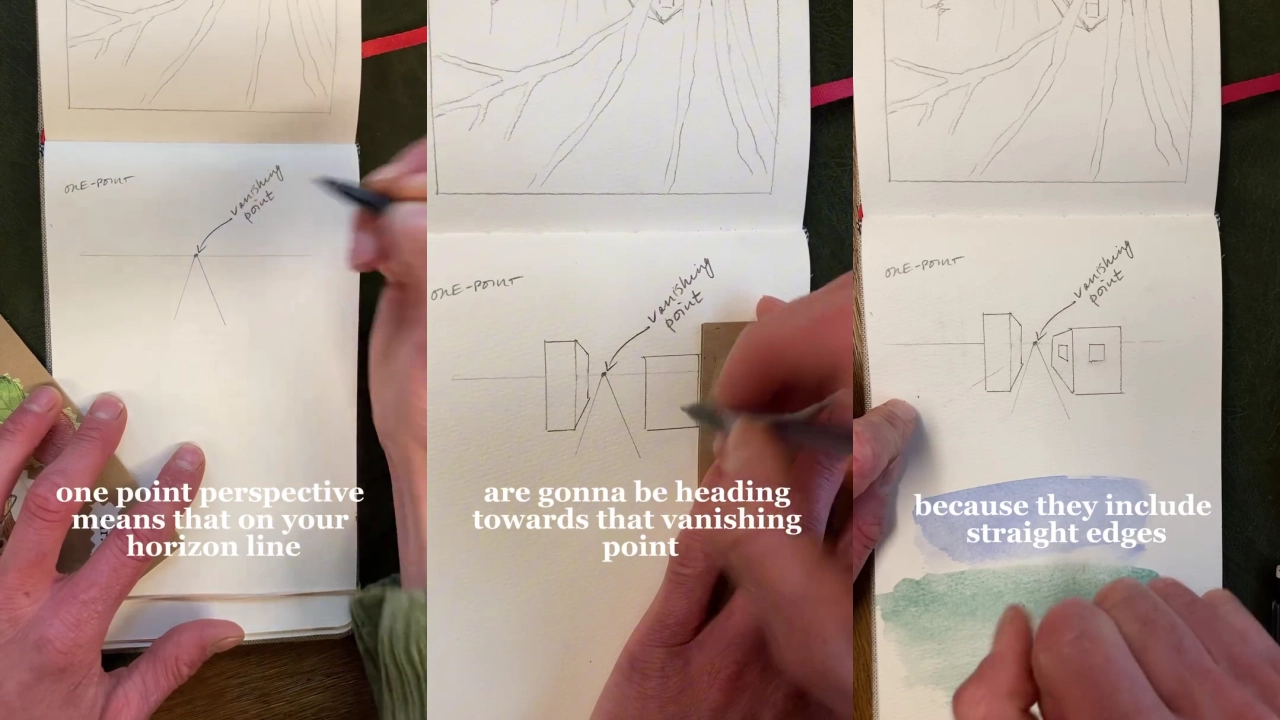
One-point perspective means everything on your horizon line vanishes toward a single point. The sides of a building facing you stay horizontal and vertical, while every line receding into the distance, like a street or a rooftop edge, angles toward that one vanishing point.
Why This Matters
This is the simplest, most foundational type of perspective to learn. Once you've drawn the sides of a building facing you, you just use a straight edge to draw a line from each corner toward your vanishing point, and the rest of the structure falls into place. It's especially useful for architectural subjects with clear straight edges, though it can be adapted for landscape work too.
Try This
Pick a subject with a clear straight edge, like a building or a street. Draw the side facing you first, keeping those lines horizontal and vertical. Then choose one vanishing point on your horizon line, and use a straight edge to draw the receding lines from each corner toward that point.
Want to Go Deeper?
This Quick Tip covers the underlying principle of one-point perspective in general. If you'd like to see it applied to a real subject, this related Quick Tip walks through using the same technique specifically for painting buildings and cityscapes:
How to Paint a Cityscape in Watercolor (Even If You Don't Love Painting Buildings)
Ready to Build Your Watercolor Foundation?
If you're still building your composition and sketching fundamentals, my Free Beginner Watercolor Class is a good place to keep building that confidence.
👉 Join the Free Beginner Watercolor Class
If you're curious about my overall approach to teaching watercolor, you can find that on my about page.