How to Mix Your Own Black Watercolor

You can mix a rich black by combining your three primary colors together, red, yellow, and blue, in the right ratio. It doesn't actually matter which two you mix first as an "orange plus blue" or "purple plus yellow" pairing, since either way you end up combining the same three primaries in the end.
Why This Matters
The "which pair first" framing is a bit of a teaching trick, and it's worth knowing why. Watching three different complementary combinations all mute down into black might look like there's a special sequence to follow. But look closely: if the same three primaries are involved each time, the order you combine them in doesn't change the result, you're just mixing red, yellow, and blue either way.
What actually matters is which specific red, yellow, and blue you're using. Different reds and blues have different color bias, and that's what changes how "black" your black actually turns out, not the order you mix them in.
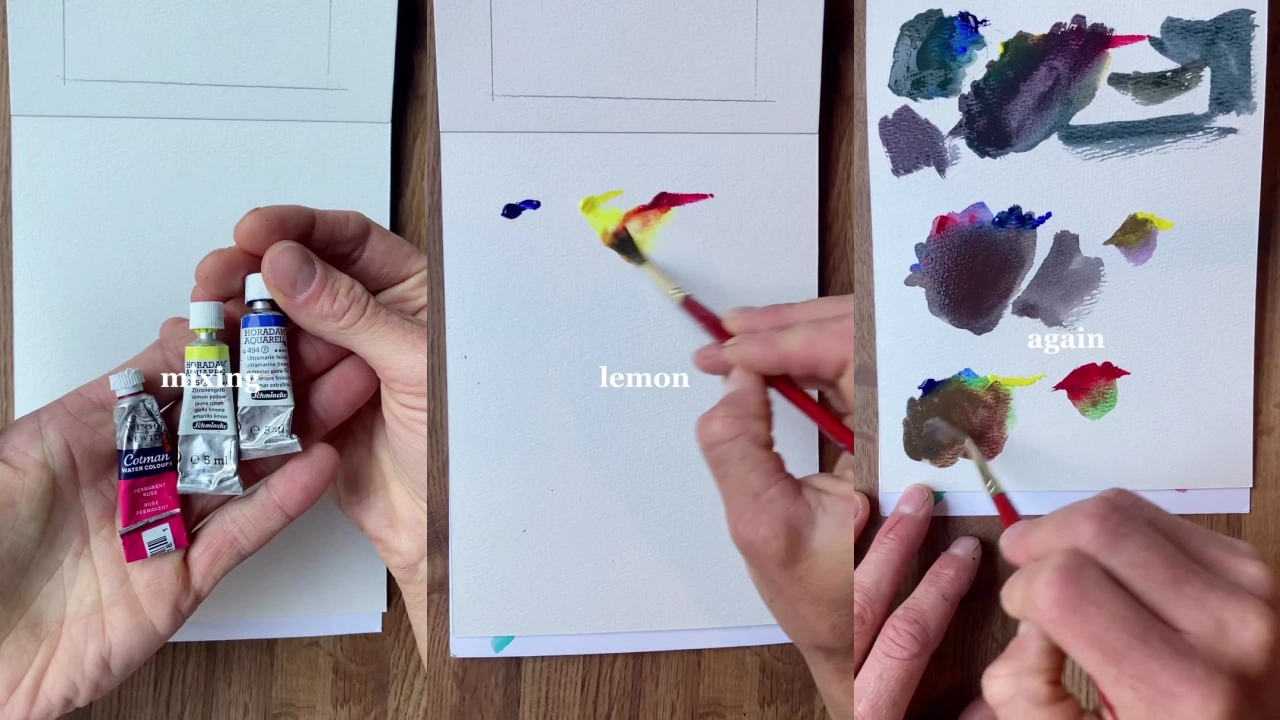
Try This
Pick a red, a yellow, and a blue from your palette. Mix them together, adjusting the ratio until they mute down into a rich, dark neutral. Don't worry about which two to combine first, focus instead on noticing how the specific primaries you chose affect the richness and warmth of the black you end up with.
Want to Go Deeper?
If you liked this, this related long blog covers the underlying concept that explains why your choice of primaries matters more than the mixing order:
What Is Color Bias in Watercolor? (And Why It Causes Muddy Colors)
Ready to Take Your Color Mixing to the Next Level?
Understanding how your specific primaries interact is a core color mixing skill. My Free Color Mixing Workshop is a good place to keep building that confidence.
👉 Join the Free Color Mixing Workshop
If you're curious about my overall approach to teaching watercolor, you can find that on my about page.