Why Purple and Yellow Make Mud in Watercolor (and Get Gray Instead)
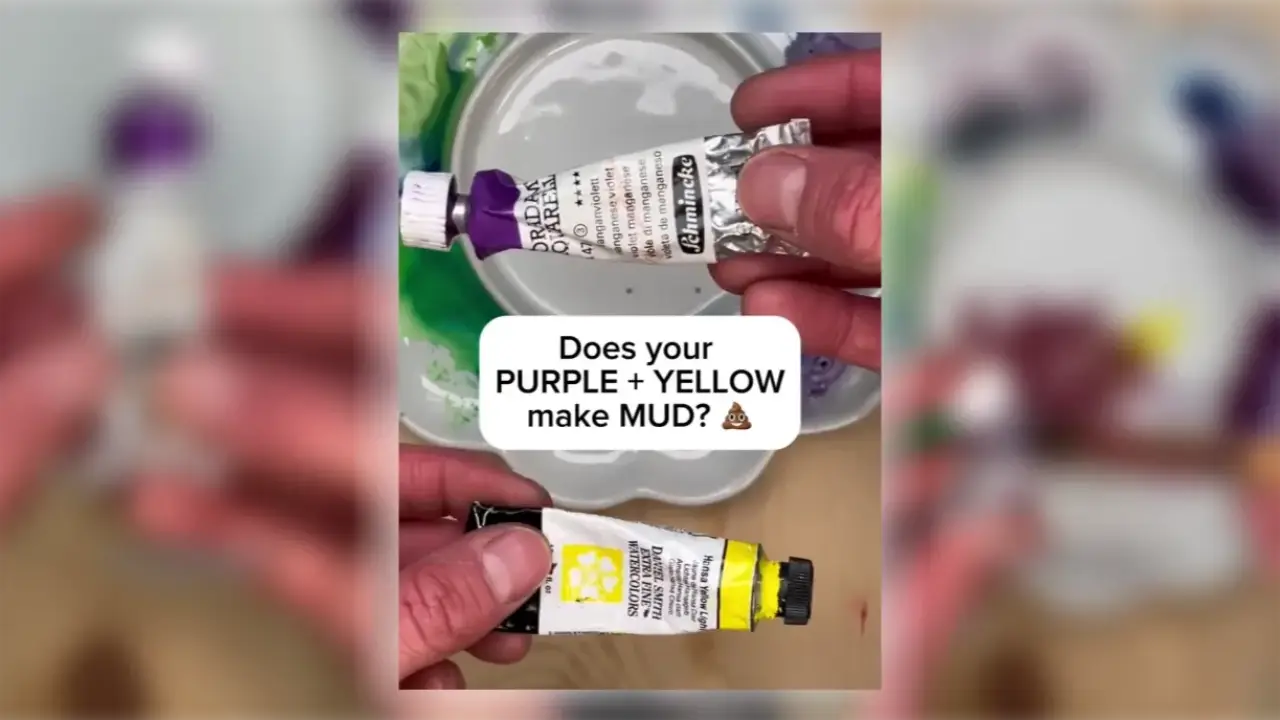
Purple and yellow are complements, so they should mute each other into a nice neutral gray when mixed. If you get mud instead, a premixed purple tube like manganese purple may be the problem, because you can't adjust its blue or red. Mix your own custom purple and you can.
Why This Matters
Purple and yellow sit across from each other on the color wheel, which makes them complements. In theory, complements neutralize each other, so mixing them should give you a soft, neutral gray. If your purple and yellow turn to mud, something else is going on.
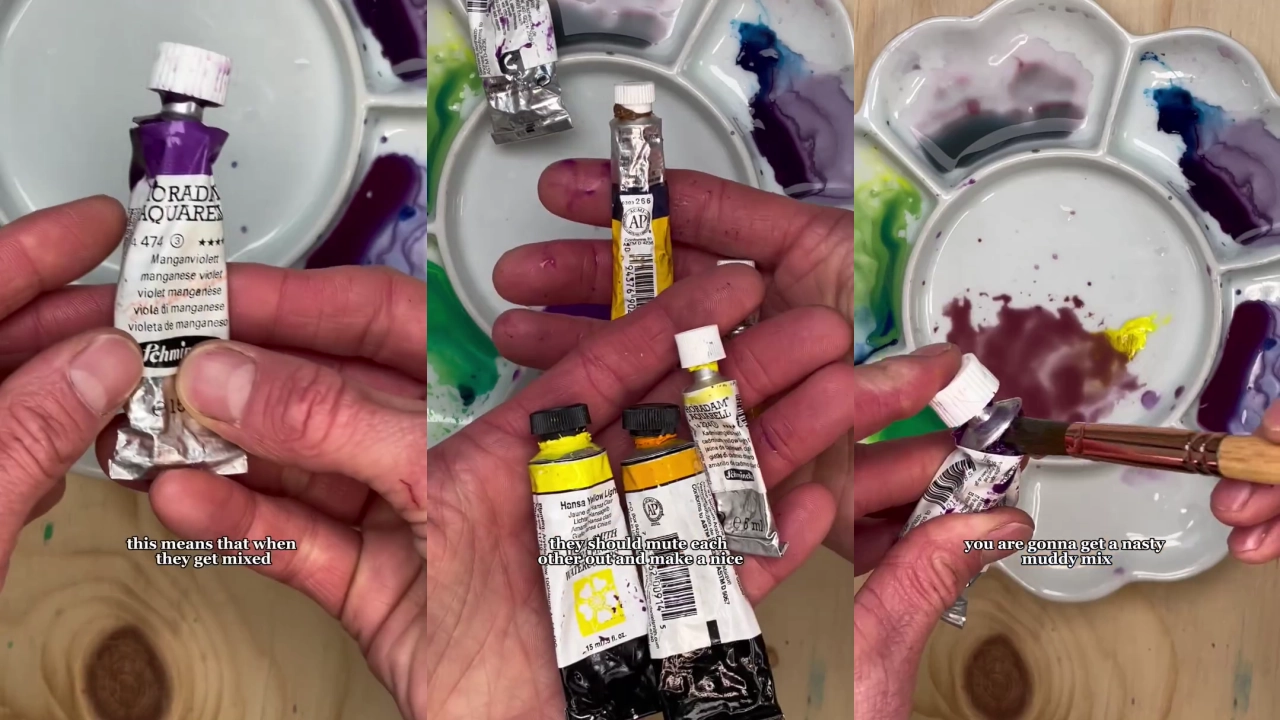
Often the culprit is the purple itself. A premixed purple, such as manganese purple, comes with its blue and red already balanced, and you can't change that. Pair it with a warm yellow like new gamboge and the mix can still turn out mucky, because there is nothing left to adjust.
Try This
- Mix your own custom purple from a red and a blue.
- Combine that purple with your yellow.
- Shift the purple toward more red or more blue until the mix settles into a neutral gray.
A custom purple gives you control over the red or blue, which a premixed tube can't. That is the main reason premixed purples are frustrating for color mixing.
Want to Go Deeper?
If you'd like more on why mixes turn muddy, you may find this related article helpful:
Why Are My Watercolors Muddy? The Real Reason Your Colors Look Dull (And How to Fix It)
Ready to Keep Building Your Color Mixing Skills?
If you'd like to keep learning about color mixing, my Free Color Mixing Workshop is a good place to keep building.
👉 Join the Free Color Mixing Workshop
If you're curious about my overall approach to teaching watercolor, you can find that on my about page.